
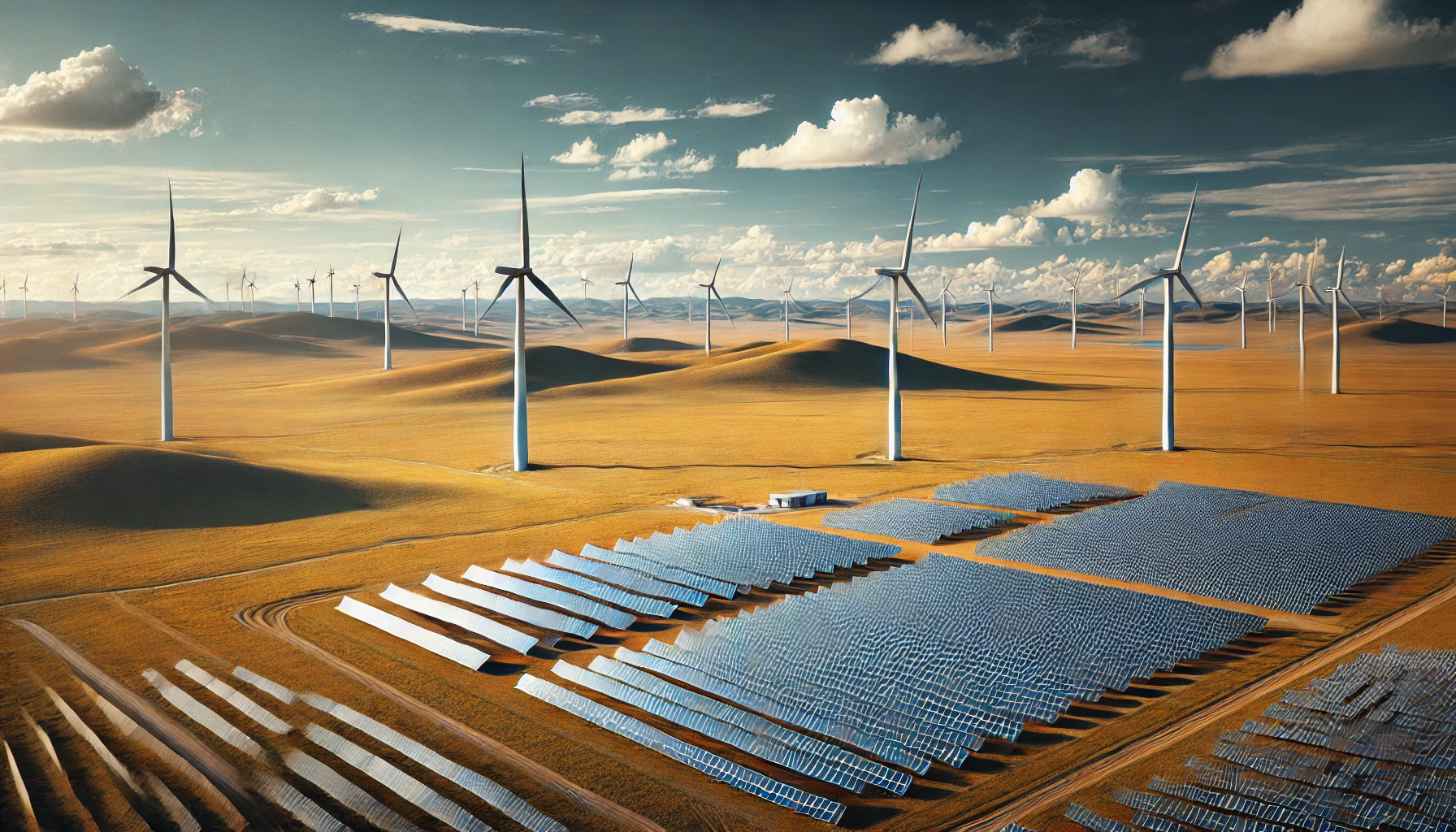
This week’s energy shock came from geopolitics — a strait half a world away moving the oil price by 10%. But there is a slower, structural energy risk building closer to home, and it is one Advance Klimate Solutions watches closely: as the UK and Europe decarbonise their power systems, electricity generation is becoming profoundly weather-dependent — and the weather itself is changing. A grid built on wind, sun, water and thermal cooling is a grid exposed to the climate in ways a fleet of gas and coal stations never was. Climate change is therefore no longer only a driver of energy policy; it is increasingly a direct input into energy supply.
How a warming climate reshapes generation
The effects run through every major source of power, and they are not uniform — some technologies lose more than others, and the losses tend to cluster in exactly the wrong moments.
Hydro is the most directly climate-exposed source. Prolonged droughts — increasingly frequent across the Alps, the Nordics and Iberia — lower reservoir levels and river flows, cutting output. Europe’s severe 2022 drought sharply reduced hydro generation, and Norway, the continent’s “green battery”, has periodically restricted exports when reservoirs ran low. Shifting snowmelt timing further complicates the seasonal supply on which many systems rely.
Thermal and nuclear plants need water for cooling, and heatwaves attack from two sides: rivers run lower, and their water runs warmer. France — which relies on nuclear for the bulk of its power — has repeatedly had to curtail reactor output during hot summers when the Rhône and Garonne became too warm to absorb the discharge without breaching environmental limits. As heatwaves intensify, these curtailments arrive precisely when cooling demand is highest.
Wind is now the backbone of UK power, which makes still days a system-level concern. Extended low-wind periods — often called Dunkelflaute when paired with dark winter skies — can suppress output for days, as an unusually calm 2021 did across north-west Europe. Climate change may also gradually alter average wind speeds and storm patterns, though the direction and scale of that shift remain areas of active scientific study.
Counter-intuitively, extreme heat slightly reduces the efficiency of solar photovoltaic panels, which lose output as they get hotter. Wildfire smoke and dust can also dim generation. Against this, a warming climate may bring more clear-sky days in some regions — one of the few effects that can cut in generation’s favour, though rarely enough to offset the losses elsewhere.
Even power that is generated must be delivered. High temperatures reduce the carrying capacity of transmission lines (they sag and hit thermal limits) just as demand peaks, while storms, flooding and wildfires physically damage infrastructure. The network, not just the plant, is a point of climate vulnerability.
The deepest danger is not any single effect but their coincidence. A hot, still, dry spell can suppress hydro, curtail nuclear, and becalm wind simultaneously — all while air-conditioning drives demand to a peak. Climate change raises the odds of these “correlated” events, in which multiple low-carbon sources fail together at the moment of greatest need. A system that is reliable on average can still be fragile in the tails, and it is the tails that climate change is fattening.
Two systems, two exposures
United Kingdom
- Wind-led: heavy reliance on offshore and onshore wind makes prolonged low-wind spells the defining risk
- Little hydro: limited hydro buffer compared with the continent
- Heat on the grid: rising summer peaks and line-capacity loss on hot days
- Interconnector-dependent: increasingly reliant on imports via subsea cables when domestic supply dips
Continental Europe
- France: nuclear cooling-water curtailments during heatwaves and low river flows
- Alps & Nordics: hydro output swings with drought and snowmelt timing
- Iberia: drought risk to hydro, offset by strong (heat-sensitive) solar
- Germany: wind-and-solar heavy, exposed to Dunkelflaute and reliant on cross-border flows
What follows for resilience
The policy implication is not to slow decarbonisation — fossil generation carries its own, larger climate cost — but to build a system that is robust to correlated weather stress. That points to the themes these briefs have returned to all summer: greater diversification of low-carbon sources, expanded storage (batteries, pumped hydro, longer-duration options), stronger interconnection so surpluses in one region cover deficits in another, demand flexibility to shave peaks, and a reserve of firm, low-carbon capacity for the still, dark, dry spells. Climate resilience and decarbonisation, in other words, have to be engineered together.
Interpretation, not forecast: the magnitude of these effects varies by region, technology and time horizon, and remains the subject of active scientific and engineering research. This section summarises the mainstream understanding of how a changing climate interacts with power generation; specific historical episodes are cited illustratively, and none of it constitutes investment advice or a prediction for any particular system or winter.
Leave a Reply